Burghardt Property
In the heart of East Tennessee, in Shields Cove surrounded by Clinch Mountain in Grainger County, sits a 162-acre property owned by Gordon Burghardt and his wife, Sandra Twardosz. With its woodlands, a small private lake, and many streams feeding into Lea Creek and ultimately the Holston River, the land provides important habitat for wildlife and a refuge for many plants.
In 2013, Burghardt, an Alumni Distinguished Service Professor Emeritus in the departments of Psychology and Ecology & Evolutionary Biology at the University of Tennessee, Knoxville, decided with his wife, Sandra, to protect his land through a conservation easement with The Land Trust for Tennessee. His decision was driven by a lifelong interest in nature, his research background, and concerns about increasing development in the region.

Gordon Burghardt at his cabin.
Burghardt grew up in the Bay View area of Milwaukee, where he had access to parks and open spaces. He spent summers at Camp Charles Allis, a retreat his family was part of for generations. “Everyone had a job,” he recalled. “Kids picked berries, set the table, fished, and played outside.” That experience shaped his appreciation for outdoor spaces and later influenced his decision to purchase land in Tennessee. After earning his Ph.D. in Chicago in the then new field of biopsychology, Burghardt moved to Tennessee to work in academia. His research on animal behavior, particularly snakes and reptiles, made his land a valuable place for study.
“I watch, mark, and tag the animals to track growth and survival,” he said. Over the years, he has welcomed students and researchers to the property, including experts studying fungi, mosses, and wildflowers. “It’s a useful site for research, especially being so close to Knoxville and the university” he added.
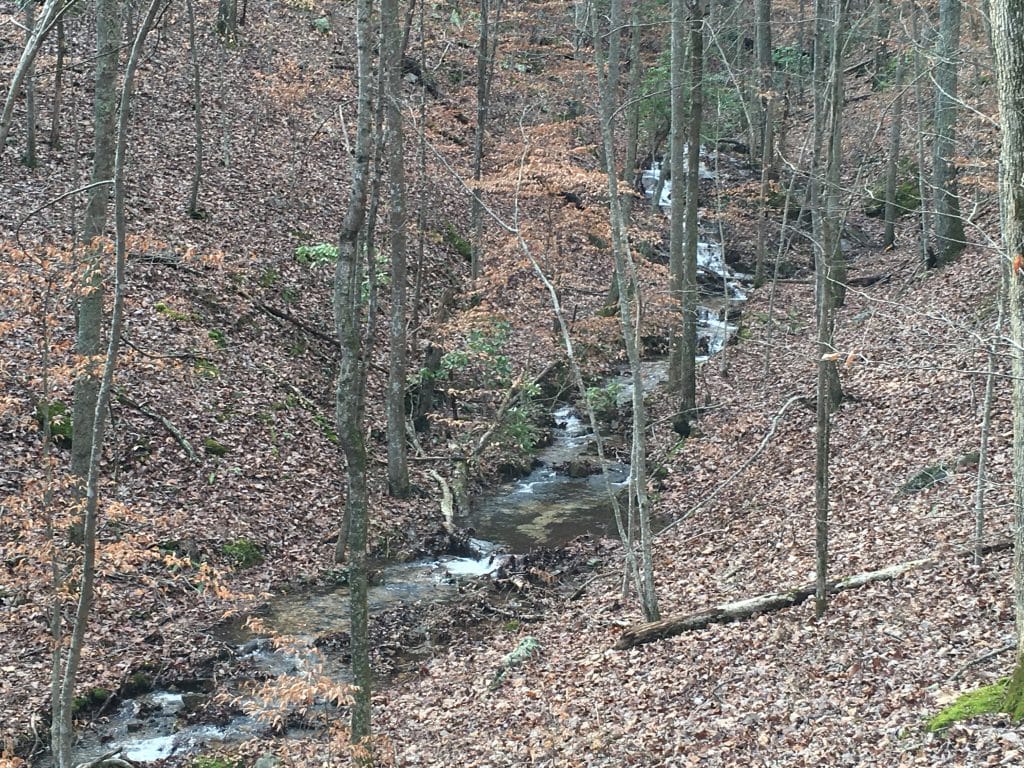
Stream at the Burghardt property.
Burghardt had always planned to keep his property undeveloped, but an out-of-state company’s proposal to condemn nearby land for a power project pushed him to take action. “They wanted to use the hillsides for pumping water up a thousand feet or more to generate power and argued no one needed the land,” he said. “That motivated me to protect it permanently.”
He also saw the growing impact of development on Tennessee’s landscapes. “Farmland and forests are disappearing quickly,” he said. “More people need to consider protecting their land to keep open spaces in areas that are becoming urbanized.”
-

- Sunrise view of the lake at the Burghardt property.
-
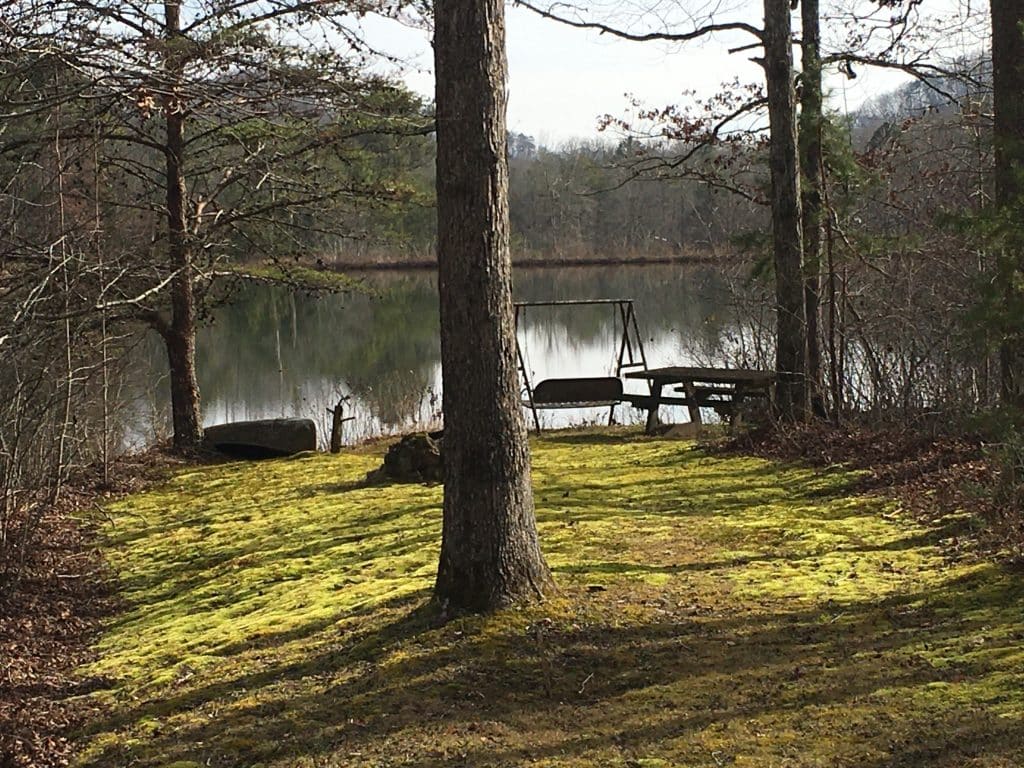
- Lake at the Burghardt property.
For Burghardt, protecting his land was a way to ensure its future. The conservation easement he put in place allows for one additional home near the lake, providing an option for his children if they ever choose to return. Though his daughters are both professors in biology and live elsewhere, they recognize the importance of what he has done.
Burghardt finds satisfaction in actively protecting his land. “It’s one thing to donate to conservation efforts, and we do that too, but physically protecting land and seeing the results makes a real difference,” he said. “Many species—salamanders, frogs, snakes, not to mention birds, small mammals, and insects—are losing habitat. Providing a place for them matters.” As he transitions into retirement, he plans to spend more time on the property writing about his research and experiences with the flora and fauna he’s encountered. With his land permanently protected, he knows it will remain a refuge for wildlife and an example of what individuals can do to make a lasting impact.
“With the way things are going, especially near urban areas in East Tennessee, protecting open spaces is more important than ever,” he said. “I’m glad we are able to do our part.
Support The Land Trust for Tennessee’s statewide conservation efforts!