Exploring Tennessee’s Rich Biodiversity at the Inaugural TWRA Biodiversity Summit
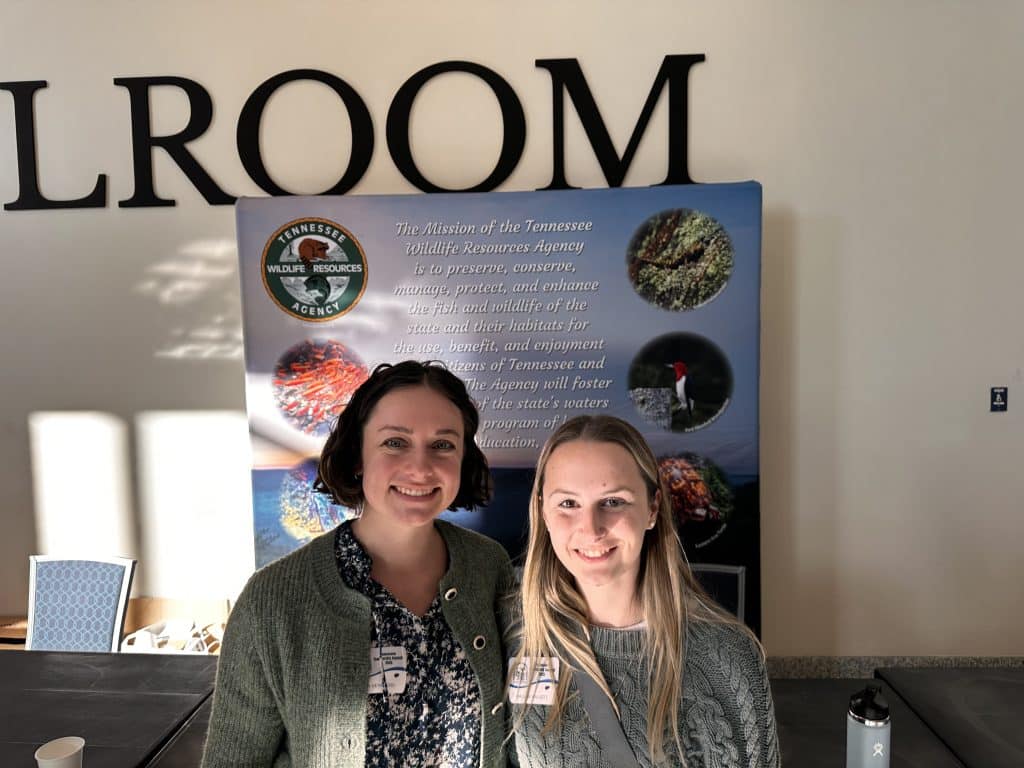
Last week, members of The Land Trust for Tennessee’s conservation team, Conservation Coordinator Caroline Willett and Conservation Manager Lina Denaroso, attended the Tennessee Wildlife Resources Agency’s inaugural Biodiversity Summit at Middle Tennessee State University. The event brought together conservation professionals, researchers, and advocates to celebrate and discuss the extraordinary range of species that call Tennessee home.
Connecting People and Biodiversity
Roger McCoy, Director of Conservation for the Tennessee Department of Environment and Conservation, opened the summit with a keynote about meeting people where they are and inviting them to enjoy the benefits of biodiversity through recreation. His message resonated with our work at The Land Trust for Tennessee, especially our Community Days at Glen Leven Farm, where we welcome visitors to experience the beauty and importance of protected land. The Land Trust also protects public parks across the state, like Walden’s Ridge Park in Chattanooga, Shelby Farms Park in Memphis, Lakeshore Park in Knoxville, Beaman Park in Nashville, and many more.
McCoy also spoke about legacy as a key theme in conservation, which connects closely to this year’s Once in a Blue Moon celebration theme of conservation through generations. The idea of legacy reminds us that the work we do today ensures future generations can experience Tennessee’s natural richness for years to come.
Amphibians: Indicators of Ecosystem Health
Tennessee is home to 87 amphibian species, 40 percent of which are considered species of greatest conservation concern. Amphibians play important roles in regulating insect populations, recycling nutrients, and serving as both predator and prey within their ecosystems. Their sensitivity to environmental change makes them valuable indicators of ecosystem health and even sources for medical research and cancer treatments.
One of the most fascinating amphibians in Tennessee is the Hellbender, the largest in North America. These giant salamanders can grow over two feet long and live more than 25 years. They rely on cool, clean, fast-moving streams to survive, but their populations have declined dramatically since the 1990s due to habitat loss and poor water quality.
The Biodiversity Beneath Our Feet
Tennessee’s incredible species diversity is tied to its landscapes and geology. With more caves than any other state, Tennessee ranks second in the nation for subterranean biodiversity, a hidden world full of life that depends on clean water and intact habitats above ground.
Bats, Crayfish, and Mussels: Unsung Heroes of Tennessee’s Ecosystems
The summit also highlighted other species that are vital to healthy ecosystems:
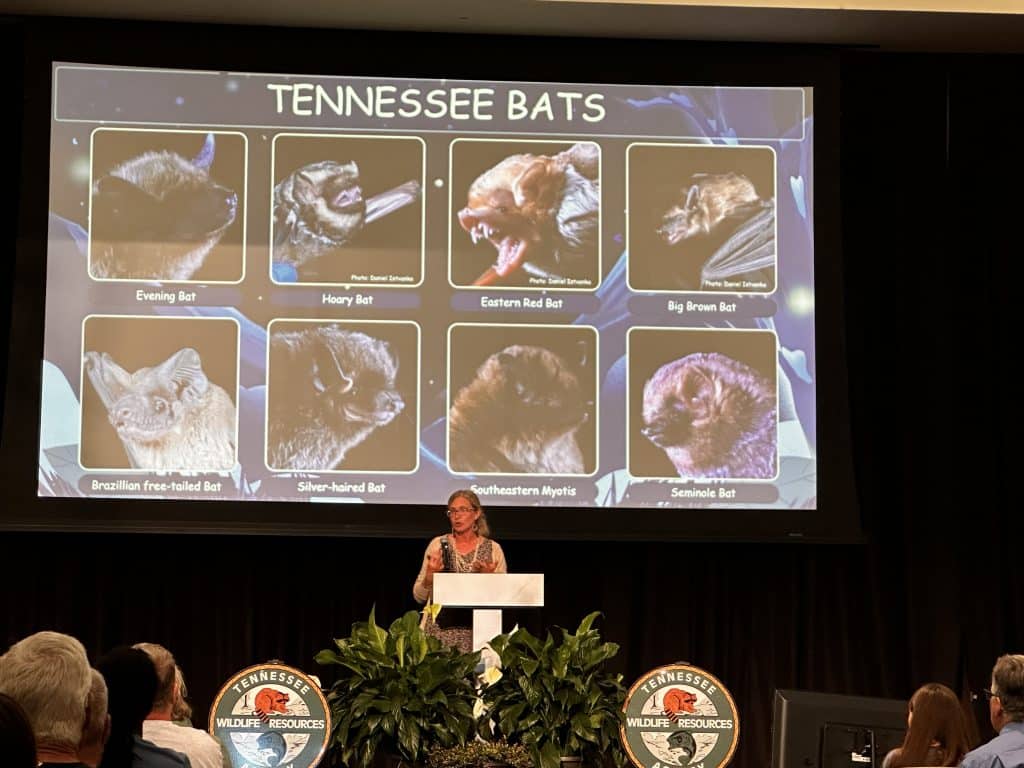
- Bats: Sixteen species live in Tennessee, from the small-footed bat to the large hoary bat. Many are threatened by White-Nose Syndrome, a fungal disease introduced to the U.S. in 2006. Presenters emphasized that protecting riparian zones, managing forests to promote insect diversity, and reducing disturbance around caves can help bats recover.
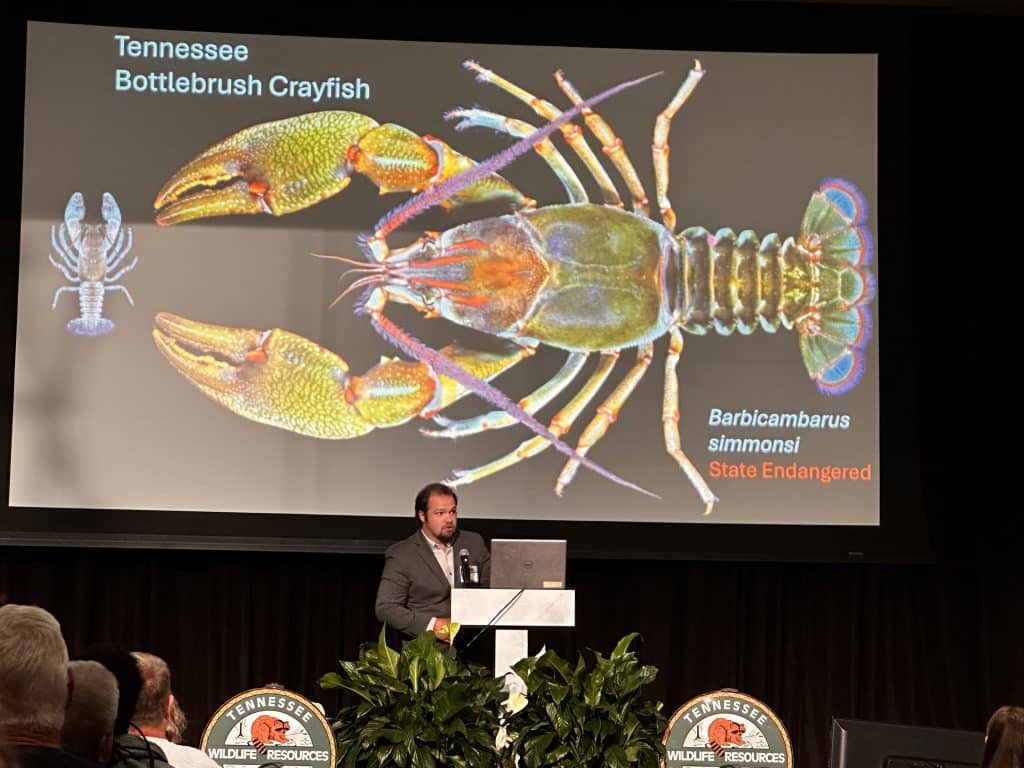
- Crayfish: Tennessee ranks second only to Alabama in crayfish diversity, with 97 species, including Barbicambarus simmonsi, a state-endangered giant found nowhere else in the world. The southeastern United States has the greatest crayfish diversity on the planet.
- Mussels: Our rivers support 144 species of freshwater mussels, one-third of which are federally listed. Mussels act as natural water filters and “ecosystem engineers,” keeping gravel in place and improving water quality for all species.
Addressing Threats and Building Solutions
Tennessee’s State Wildlife Action Plan (SWAP) identifies 53 major threats to biodiversity, including development, incompatible agricultural practices, energy development, fire suppression, and stream channelization. It also outlines 129 conservation actions, from habitat restoration and conservation planning to climate adaptation and capacity building, and highlights 36 Conservation Opportunity Areas across the state.
A new chapter focused on private lands points to opportunities for partnerships with landowners, which aligns closely with The Land Trust for Tennessee’s mission to protect land through voluntary, lasting agreements.
A Shared Responsibility
Aldo Leopold once wrote, “To keep every cog and wheel is the first precaution of intelligent tinkering.” His words remind us why biodiversity matters: every species plays a role in maintaining the balance of our natural systems.
While the scale of biodiversity loss can sometimes feel daunting, moments of connection like seeing a child marvel at a frog during a nature walk or smelling a flower remind us why this work matters. When people build relationships with nature, they also build the foundation for its protection.